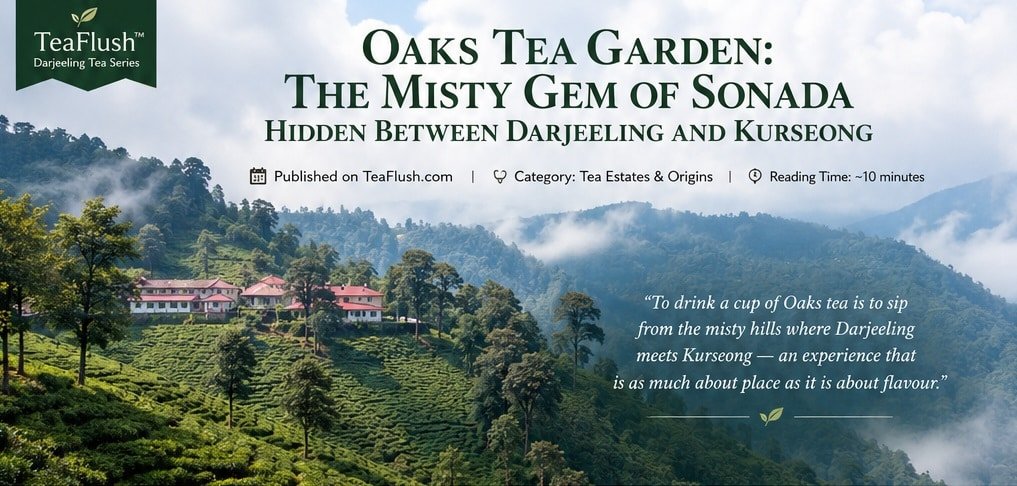
Oaks Tea Garden: The Misty Gem of Sonada Hidden Between Darjeeling and Kurseong
Published on TeaFlush.com | Category: Tea Estates & Origins | Reading Time: ~10 minutes
“To drink a cup of Oaks tea is to sip from the misty hills where Darjeeling meets Kurseong — an experience that is as much about place as it is about flavour.”
Table of Contents
Introduction: Why Oaks Tea Garden Deserves Your Attention
When tea connoisseurs speak of Darjeeling’s finest estates — names like Makaibari, Margaret’s Hope, and Castleton often dominate the conversation. Yet nestled quietly in the mist-laden valley of Sonada lies one of the most underrated and consistently celebrated tea gardens in the region: Oaks Tea Garden.
If you’re a true tea lover who enjoys discovering honest, high-quality, single-estate Darjeeling teas that offer exceptional value without sacrificing character, Oaks Tea Garden is a name you need in your vocabulary — and in your teacup.
At TeaFlush.com, we believe every tea tells a story of its soil, its altitude, and its people. Oaks Tea Garden tells one of the most compelling stories in the Darjeeling hills. Here is everything you need to know.
Where Is Oaks Tea Garden? Location & Geography
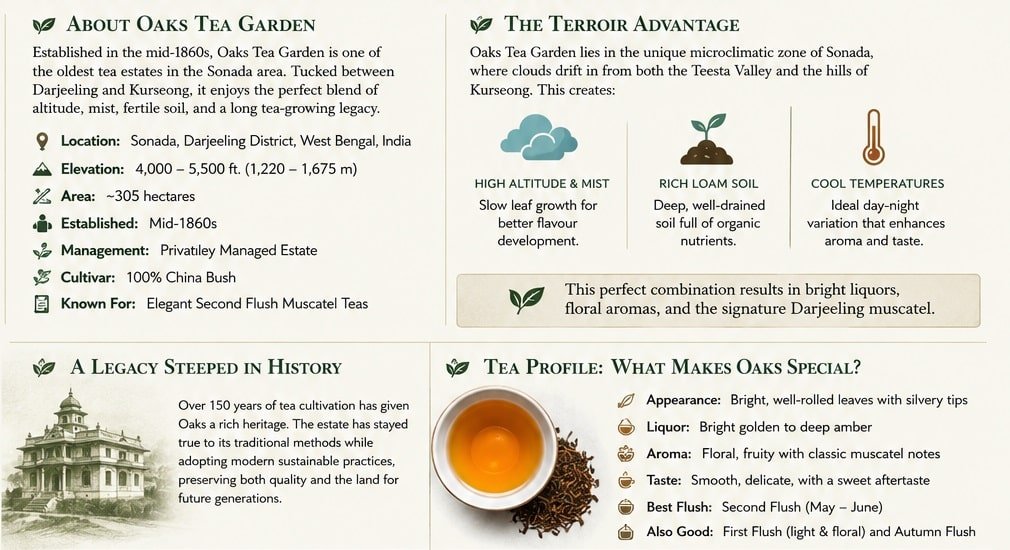
Oaks Tea Garden is situated in Sonada, a small and scenic hill town that sits perfectly midway between the iconic towns of Darjeeling and Kurseong, in the state of West Bengal, India.
- Administrative Region: Kurseong (North) Sub-Division, Darjeeling District, West Bengal
- Nearest Towns: Sonada (local), Kurseong (~15 km), Darjeeling (~20 km)
- Country: India
Sonada itself is a quiet, often overlooked hill settlement that is sandwiched between two of India’s most famous tea towns. This strategic location — sitting in the Kurseong North subdivision — places Oaks firmly within the legally protected and geographically defined Darjeeling Tea growing zone, as regulated by the Tea Board of India.
The Sonada valley is surrounded by several celebrated tea estates, making it one of the most tea-dense valleys in all of Darjeeling. The clean mountain air, consistent fog cover, and pristine water sources flowing from the Eastern Himalayas make Sonada an ideal terroir for producing world-class Darjeeling tea.
History of Oaks Tea Garden
Oaks Tea Garden carries the weight of over a century of tea-growing heritage. Established in the early 1900s, the garden came into existence during the twilight years of British colonial tea cultivation in India — a period when the Darjeeling hills were already well-established as the world’s premier fine tea-producing region.
The British colonial administration had begun planting tea in the Darjeeling hills as early as the mid-1800s, seeking an alternative supply of premium tea apart from China. The sinensis variety of the tea plant — the Chinese cultivar — was found to thrive particularly well in the cool, sloped, cloud-covered terrain of the Eastern Himalayas. Oaks Tea Garden was born out of this tradition and heritage, featuring original Chinary (China) tea bushes that are now well over a century old.
Over the decades following Indian independence, estates across Darjeeling were sold and transferred to Indian businesses. Oaks Tea Garden continued its legacy under Indian stewardship, maintaining the traditional orthodox processing methods that have made Darjeeling tea internationally celebrated.
Today, Oaks Tea Garden is a USDA Certified Organic estate, reflecting a commitment not just to historical tradition but to modern, responsible, and sustainable agriculture.
The Terrain, Altitude & Microclimate of Sonada Valley
The magic of any Darjeeling tea begins with its terroir — a French concept meaning the complete natural environment in which a tea is produced, including its soil, altitude, and climate. Oaks Tea Garden benefits from one of the most desirable terroirs in the entire Darjeeling region.
Altitude
Located in the Kurseong North zone, the tea gardens around Sonada sit at a significant elevation, with tea bushes planted across varying hillsides. High-altitude cultivation slows the growth of tea leaves, allowing them to develop more concentrated flavours, complex aromas, and the delicate nuances that Darjeeling teas are celebrated for globally.
Climate & Rainfall
The Sonada valley experiences:
- Cool, misty winters (November to February) when the tea bushes lie dormant
- Spring rains that trigger the prized first flush
- Warm monsoon rains from July to September that produce the monsoon flush
- A mild autumn that gives way to the final autumnal flush
The seasonal rhythm of the Eastern Himalayas creates those famous four distinct flushes — each producing teas with completely different flavour profiles and character.
Soil
The slightly acidic, loamy soil enriched with high organic matter is characteristic of the Darjeeling hill region. This soil type, combined with the excellent drainage offered by the sloped terrain, creates ideal conditions for Camellia sinensis var. sinensis to produce the most aromatic and complex leaves possible.
Afternoon Cloud Cover
One of Darjeeling’s most famous natural advantages is its daily afternoon cloud cover. This natural “shade cloth” reduces direct sunlight on the tea leaves during the hottest part of the day, slowing down photosynthesis and encouraging the production of more complex aromatic compounds within the leaf. Sonada, sitting in a valley between two hills, experiences this phenomenon beautifully.
What Makes Oaks Tea Unique? The China Bush Advantage
The single most defining characteristic of Oaks Tea Garden’s production is its original China (Chinary) tea bushes.
While many Darjeeling gardens have over the decades supplemented or replaced older China bushes with hybrid clonal varieties (such as AV2, a cross between Assam and China bushes), Oaks Tea Garden has preserved its original Chinary plantation. These are direct descendants of the tea bushes originally brought from China in the 19th century.
Why Do China Bushes Matter?
- Smaller leaves: Camellia sinensis var. sinensis produces smaller leaves than Assam-type bushes. Smaller leaves = more concentrated flavour per gram of tea.
- More complex aroma: The sinensis cultivar is naturally more aromatic than its assamica counterpart, producing the delicate floral and muscatel notes Darjeeling is famous for.
- Age = depth: Century-old tea bushes have deep root systems that draw mineral-rich water from deep within the soil, imparting a terroir-specific complexity to the tea that young bushes simply cannot replicate.
- Lower yield, higher quality: Old China bushes produce fewer leaves per season than clonal varieties, but what they produce is of far superior quality.
This combination of original Chinary bushes, organic cultivation, and high-altitude Sonada terroir is what gives Oaks Tea Garden its distinctive, value-for-money, high-quality teas that connoisseurs keep returning to season after season.
Oaks Tea Garden: Organic Certification & Sustainability
In an era where consumers are increasingly aware of what goes into their cup, Oaks Tea Garden stands out as a USDA Certified Organic estate. This means:
- No synthetic pesticides or herbicides are used on the tea bushes
- No chemical fertilizers are applied to the soil
- Farming practices are independently verified to meet the United States Department of Agriculture’s rigorous organic standards
- The garden follows sustainable agricultural practices that protect the local ecosystem, soil health, and biodiversity
For tea drinkers at TeaFlush.com, this certification matters enormously. When you brew a cup of Oaks Tea, you can be confident you are drinking a tea that is as clean and pure as the Himalayan air in which it was grown.
The Sonada valley itself is rich in biodiversity — from the tall conifers on the upper ridges to the flowering shrubs along the garden paths. Organic farming at Oaks helps preserve this natural ecosystem, ensuring that the beneficial insects, birds, and microorganisms that contribute to healthy soil and natural pest control remain protected.
The Four Flushes of Oaks Tea Garden
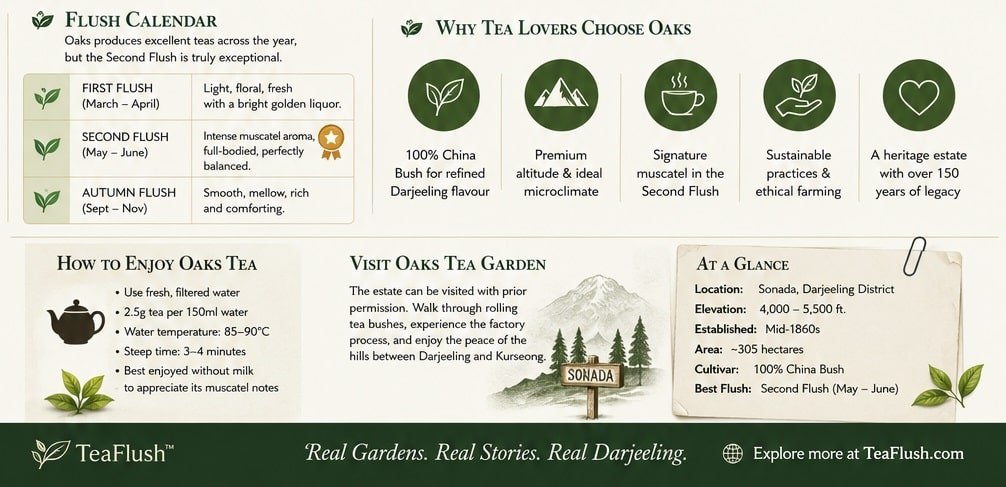
Like all Darjeeling estates, Oaks Tea Garden produces tea across four distinct harvest seasons, known as flushes. Each flush yields teas with markedly different sensory characteristics.
🌱 First Flush (March – April): The Spring Awakening
The first flush is the most anticipated harvest of the year. After months of winter dormancy, the tea bushes send out their first delicate new growth following the spring rains.
Characteristics of Oaks First Flush:
- Leaf appearance: Fresh, darkish green leaves with both tips and leaves present; light, airy texture
- Liquor colour: Bright yellowish to pale golden
- Aroma: Freshly vegetal, with notes of honeysuckle and a subtle, refreshing minty quality
- Flavour: Fresh and vegetal with notes of honeysuckle, mild astringency, and a clean finish with hints of subtle mint
- Body: Light to medium
- Oxidation level: Lower than second flush — closer in character to an oolong than a fully oxidised black tea
Brewing tip for First Flush: Use water at approximately 85°C (185°F) and steep for 2 to 2.5 minutes. A second infusion at the same temperature for the same duration yields a rewarding additional cup.
The first flush from Oaks has received consistent praise for delivering freshness, quality, and excellent value — ticking the boxes of both the casual drinker and the dedicated connoisseur.
☀️ Second Flush (May – June): The Muscatel Crown
The second flush is widely regarded as the pinnacle of Darjeeling tea production — and Oaks Tea Garden’s second flush is particularly noteworthy.
During this period, the rapid growth of new leaves following the first harvest, combined with the activity of leafhopper insects feeding on the tea leaves, triggers a remarkable chemical reaction within the plant. The tea plant produces terpenes in response to the insect damage, and it is precisely these compounds that create the legendary muscatel flavour — that distinctive sweet, spiced, slightly grape-like character that has made Darjeeling second flush teas globally famous.
Characteristics of Oaks Second Flush:
- Leaf appearance: Larger, darker leaves with a purplish hue and sometimes light tips
- Liquor colour: Amber to deep golden
- Aroma: Rich, aromatic, and complex with woody and fruity notes
- Flavour: A mild woody character beautifully complemented by a fruity, sweet flavour; well-rounded, ample in the mouth, quite aromatic and intense
- Body: Medium to full
- Finish: Long, clean, with a characteristic muscatel sweetness
Best enjoyed: Without milk, allowing the full muscatel character to shine. The ideal afternoon tea companion — especially paired with creamy desserts such as trifle or an éclair.
🌧️ Monsoon Flush (July – September): The Blender’s Friend
The monsoon flush at Oaks, as across all Darjeeling gardens, is produced during the heavy rainy season. Excessive moisture in the atmosphere accelerates leaf growth, but dilutes the concentrations of aromatic compounds.
Characteristics of Oaks Monsoon Flush:
- Flavour: Milder, less complex than first or second flush
- Body: Fuller, bolder
- Use: Primarily valued by tea blenders for creating flavoured teas, chai blends, and commercially sold everyday teas
- Price: More affordable — excellent entry-level Darjeeling
While monsoon flush teas are not the headline-grabbers of Oaks’ production, they serve an important commercial role and are a perfectly good introduction to the estate’s character for budget-conscious tea drinkers.
🍂 Autumn Flush (October – November): The Season’s Farewell
The final harvest of the year before the bushes enter their winter dormancy produces the autumnal flush — a tea with its own distinct and loyal following.
Characteristics of Oaks Autumn Flush:
- Liquor colour: Darker, fuller amber
- Aroma: More muted than second flush but wholesome and comforting
- Flavour: Creamier body, darker hue, similar in character to the second flush but with more muted aromatics and a rounder, nuttier undertone
- Body: Full, hearty
- Finish: Clean with a gentle fruity sweetness
Autumn flush teas from Oaks are excellent for those who prefer a bolder, warmer cup ideal for the cooler months.
Tasting Notes: What Does Oaks Tea Garden Tea Taste Like?
To summarise the sensory profile of Oaks Tea Garden teas across flushes:
| Flush | Colour | Aroma | Flavour | Body | Best For |
|---|---|---|---|---|---|
| First Flush | Pale golden-yellow | Honeysuckle, vegetal, minty | Fresh, light, floral, mildly astringent | Light-medium | Morning cup, without milk |
| Second Flush | Amber-golden | Woody, fruity, muscatel | Sweet, fruity, woody, aromatic, well-rounded | Medium-full | Afternoon, without milk; pairs with desserts |
| Monsoon Flush | Deep amber | Earthy, bold | Bold, straightforward | Full | Everyday blending, chai base |
| Autumn Flush | Deep amber-brown | Gentle fruity, nutty | Creamy, rounder, muted muscatel | Full | Evening cup, cooler months |
The consistent through-line across all Oaks flushes: The estate’s China bushes and organic cultivation produce teas that carry a natural freshness, clean finish, and remarkable value that set them apart from many other Darjeeling estates.
How to Brew Oaks Tea Garden Tea Perfectly
Getting the most from your Oaks Tea Garden tea requires a little attention to brewing parameters. Here are the recommended guidelines:
For First Flush (Light, Floral)
- Water temperature: 85°C (185°F) — do not use boiling water; it will scorch the delicate leaves
- Leaf quantity: 2.5g to 3g per 200ml of water (approximately 1 level teaspoon)
- Steeping time: 2 to 2.5 minutes
- Re-steep: Yes — a second infusion at the same parameters gives a rewarding cup
- Serve: Without milk; without sugar; enjoy the natural freshness
For Second Flush (Rich, Muscatel)
- Water temperature: Near boiling — 90°C to 95°C (195°F to 200°F)
- Leaf quantity: 1 teaspoon per cup (approximately 2.5g to 3g per 200ml)
- Steeping time: 3 to 4 minutes
- Re-steep: Yes, leaves can be steeped multiple times until they no longer yield flavour
- Serve: Without milk; honey and lemon are optional additions; best at room temperature or slightly warm
For Autumn Flush (Bolder, Warming)
- Water temperature: Fully boiling — 100°C
- Leaf quantity: 1 heaped teaspoon per cup
- Steeping time: 3 to 5 minutes depending on desired strength
- Serve: Can be enjoyed with or without milk
TeaFlush.com Pro Tip: Always use fresh, cold water — never re-boil water, as re-boiling reduces the dissolved oxygen content, resulting in a flat-tasting cup. Ideally, use filtered water to avoid the interference of chlorine and mineral deposits found in tap water.
Neighbouring Tea Gardens in the Sonada Valley
Oaks Tea Garden sits in wonderful company. The Sonada valley and the broader Kurseong North region are home to some distinguished Darjeeling estates, including:
- Rungmook / Cedars Tea Estate — known for delicate, aromatic teas
- Margaret’s Hope Tea Garden — one of Darjeeling’s most famous estates, producing exceptional muscatel second flush
- Moondakotee Tea Garden — a neighbour in the Kurseong North zone
- Ringtong Tea Garden — another Kurseong North estate
- Springside Tea Garden — part of the same regional cluster
- Balasun Tea Garden — established in 1871, located in Sonada along the Balasun river
- Kalej Valley Tea Estate — situated nearby in the Darjeeling East zone
This clustering of excellent estates in the Sonada valley speaks to the exceptional quality of the local terroir. The altitude, soil, and microclimate that make Oaks so special are shared, in varying degrees, by all of its neighbours.
Where to Buy Oaks Tea Garden Tea Online
Oaks Tea Garden teas are available through a number of reputable Indian and international tea retailers, including:
- Tealush.Com — stocks Oaks first flush seasonal harvests
When purchasing Oaks Tea Garden tea, look for:
- Single-estate labelling — confirming the tea comes solely from Oaks
- Flush designation — knowing whether you’re buying first, second, autumn, or monsoon flush
- Harvest year — fresher is generally better, especially for first flush; purchase from the current season where possible
- USDA Organic certification mark — confirming authentic organic production
At TeaFlush.com, we recommend seeking teas directly labelled with the Oaks Tea Garden name and avoiding blended teas that may merely contain some Oaks-origin leaves without honouring the single-estate character.
Final Thoughts: Is Oaks Tea Garden Worth Exploring?
Absolutely and unequivocally — yes.
Oaks Tea Garden occupies a fascinating space in the Darjeeling tea world. It is not the most famous estate. It does not carry the celebrity of Makaibari or the mystique of Castleton. But it offers something arguably more valuable to the everyday tea enthusiast: consistent quality, authentic Darjeeling character, USDA-certified organic production, and genuine value for money.
The estate’s original China bushes, its misty Sonada valley terroir, its century-long heritage, and its commitment to organic farming all combine to produce teas that are honest, expressive, and deeply satisfying. Whether you are savouring a bright, honeysuckle-laced first flush on a spring morning or settling in with a rich, woody second flush on a warm summer afternoon, Oaks Tea Garden delivers.
At TeaFlush.com, we celebrate tea estates like Oaks — the quiet legends that reward the curious drinker willing to look a little beyond the famous names. If you haven’t explored Oaks yet, let this be your invitation.
Your next great cup is waiting in the misty hills of Sonada.
Frequently Asked Questions
❓ Where is Oaks Tea Garden located?
Oaks Tea Garden is located in Sonada, a small town situated midway between Darjeeling and Kurseong in West Bengal, India. It falls within the Kurseong North subdivision of the Darjeeling district.
❓ When was Oaks Tea Garden established?
Oaks Tea Garden was established in the early 1900s, placing it among the older tea estates in the Darjeeling region, rooted in the British colonial era of tea cultivation.
❓ Is Oaks Tea Garden organic?
Yes. Oaks Tea Garden is USDA Certified Organic, meaning it produces tea without the use of synthetic pesticides, herbicides, or chemical fertilizers.
❓ What type of tea bushes does Oaks Tea Garden grow?
Oaks Tea Garden grows original Chinary (China) tea bushes — Camellia sinensis var. sinensis — the traditional variety introduced to Darjeeling by British planters in the 19th century. These bushes are known for producing more aromatic, complex, and delicate teas compared to hybrid Assam-type varieties.
❓ What does Oaks Tea Garden tea taste like?
Oaks teas are known for:
- First flush: Fresh, vegetal, honeysuckle notes with hints of mint and mild astringency
- Second flush: Woody character with fruity, sweet muscatel flavour — well-rounded and aromatic
- Autumn flush: Creamier, bolder, slightly muted muscatel with a warming character
❓ Which flush from Oaks Tea Garden is the best?
The second flush is widely considered the standout production of Oaks Tea Garden, praised for its well-rounded muscatel flavour, fruity sweetness, and woody character. However, the first flush is equally celebrated among those who prefer lighter, more floral teas.
❓ What is the best way to brew Oaks Tea Garden tea?
For first flush, use water at 85°C and steep for 2–2.5 minutes with 2.5–3g of leaf per 200ml of water. For second flush, use water at 90–95°C and steep for 3–4 minutes. Always serve Darjeeling teas without milk to best appreciate the nuanced flavours.
❓ What other tea gardens are near Oaks Tea Garden?
Neighbouring estates in the Sonada valley and Kurseong North region include Rungmook/Cedars, Margaret’s Hope, Moondakotee, Ringtong, Springside, and Balasun tea gardens.
Written by the TeaFlush.com Editorial Team | Explore more tea garden stories, brewing guides, and single-estate reviews at TeaFlush.com
Tags: Oaks Tea Garden, Oaks Tea Estate, Darjeeling Tea, Sonada Tea Garden, Kurseong Tea, First Flush Darjeeling, Second Flush Darjeeling, Organic Darjeeling Tea, USDA Organic Tea, China Bush Tea, Darjeeling Tea Estates, Single Estate Tea, Muscatel Tea, TeaFlush
Meta Description: Discover everything about Oaks Tea Garden — a USDA Certified Organic Darjeeling estate nestled in Sonada between Darjeeling and Kurseong. Explore its history, flushes, tasting notes, brewing guide, and more on TeaFlush.com.
Focus Keyword: Oaks Tea Garden
Secondary Keywords: Oaks Tea Estate Darjeeling, Sonada tea garden, organic Darjeeling tea, Oaks first flush, Oaks second flush, Kurseong tea garden, China bush Darjeeling tea