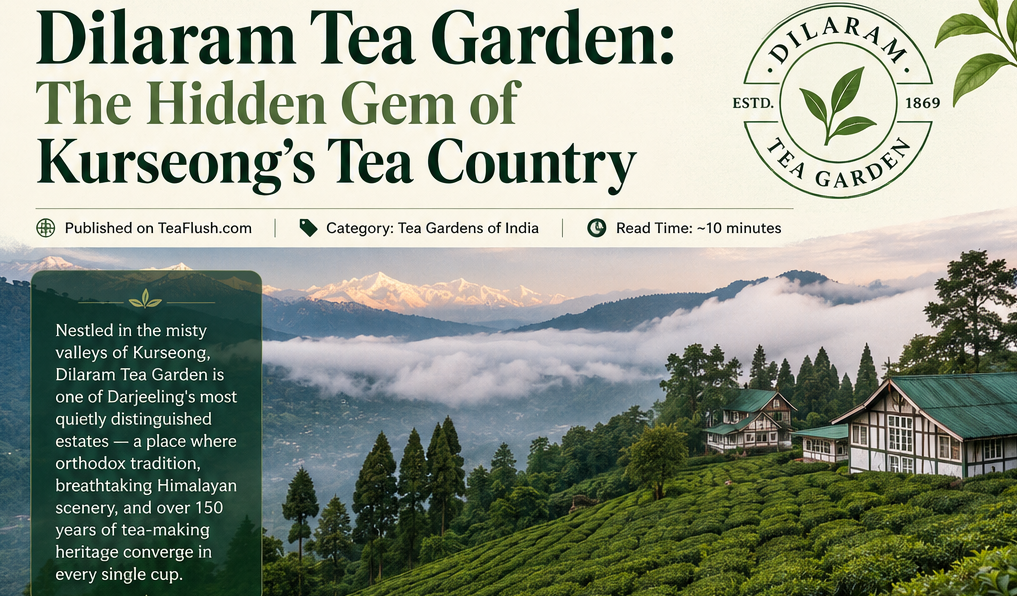
Dilaram Tea Garden: The Hidden Gem of Kurseong’s Tea Country
Published on TeaFlush.com | Category: Tea Gardens of India | Read Time: ~10 minutes
Nestled in the misty valleys of Kurseong, Dilaram Tea Garden is one of Darjeeling’s most quietly distinguished estates — a place where orthodox tradition, breathtaking Himalayan scenery, and over 150 years of tea-making heritage converge in every single cup.
Dilaram Tea Garden is a historic Darjeeling tea estate located in the Kurseong sub-division of Darjeeling district, West Bengal, India. It is one of the recognized estates in the Kurseong North tea-growing zone — a region whose teas are officially classified as Darjeeling Tea by the Tea Board of India.
The estate is celebrated for producing 100% orthodox teas using time-honoured traditional methods. Its geography — straddling dramatic elevations between the valley floor and high Himalayan ridgelines — gifts it with a terroir unlike almost anywhere else on Earth.
Though it does not always command the same global spotlight as neighbours like Margaret’s Hope or Castleton, tea connoisseurs who have tasted Dilaram’s Second Flush know exactly why this garden holds a special, near-legendary status among serious Darjeeling tea drinkers.
What Is Dilaram Tea Garden?
Dilaram Tea Garden is a historic Darjeeling tea estate located in the Kurseong sub-division of Darjeeling district, West Bengal, India. It is one of the recognized estates in the Kurseong North tea-growing zone — a region whose teas are officially classified as Darjeeling Tea by the Tea Board of India.
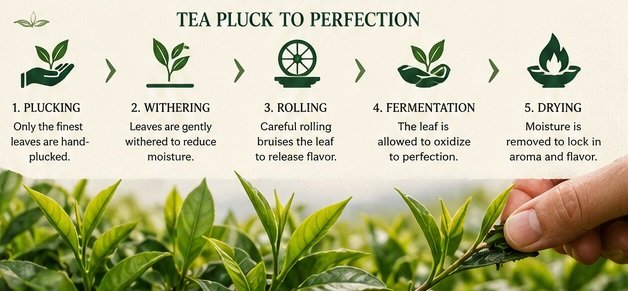

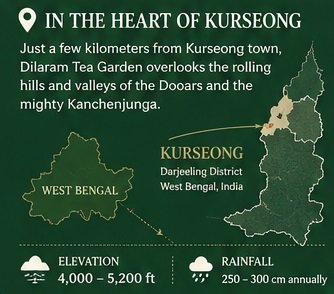
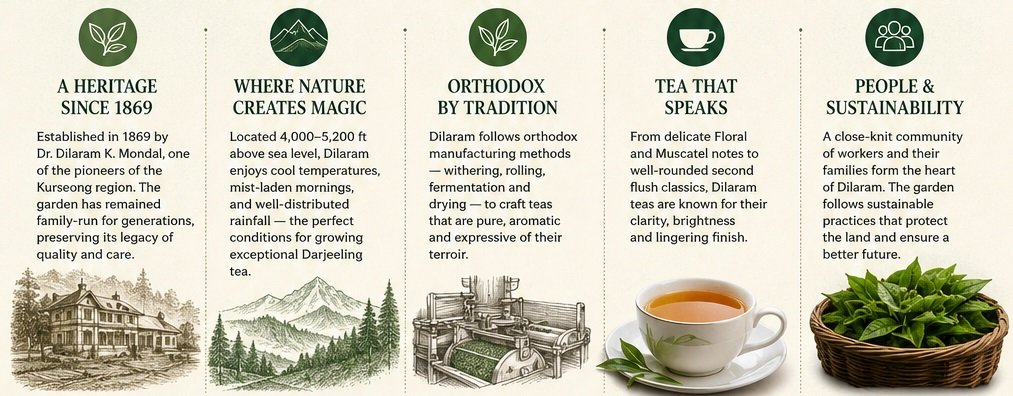
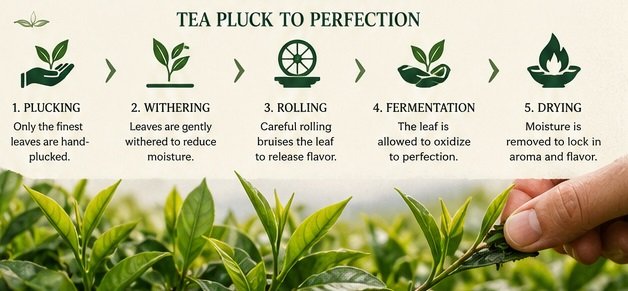
Table of Contents
History and Origins
The story of Dilaram Tea Garden begins in the British colonial era, when European planters first recognized the extraordinary tea-growing potential of the Kurseong hills.
Founding
Dilaram Tea Estate was planted by Mr. Bell in 1870, during a period when the tea industry in Darjeeling was expanding rapidly. By that year, the number of gardens in the Darjeeling region had grown to 56, collectively producing approximately 71,000 kilograms of tea annually.
Some historical records alternatively place the founding in the 1890s, suggesting Mr. Bell may have begun operations earlier and formally established the estate in the latter part of the 19th century. Either way, the garden is well over 150 years old — carrying a heritage that few tea estates anywhere in the world can match.
Early Ownership
Initially, the garden was collectively owned by eight sterling companies — British firms that dominated the Darjeeling tea industry during the colonial period. This collective ownership structure later changed due to amendments to Indian commercial law.
Post-Independence Consolidation
Following Indian independence and the restructuring of the tea industry under the 1953 Tea Act, ownership of many Darjeeling estates passed from British hands to Indian companies. Dilaram was merged with other Darjeeling tea gardens under Amoorie India Limited after 1978, part of a broader consolidation of the region’s tea economy.
Present Day
Today, Dilaram Tea Estate operates as an out-division of Margaret’s Hope Tea Estate, one of the most celebrated names in Darjeeling tea. It is managed under Amgoorie India Limited, a subsidiary of the Goodricke Group Limited — India’s second-largest tea producer and a subsidiary of the British conglomerate Camellia Plc UK.
Location and Geography
Where Is Dilaram Tea Garden?
Dilaram Tea Garden is situated along the banks of the river Rinchengtong, in the verdant valleys of the Kurseong sub-division of Darjeeling district, West Bengal. It lies approximately:
- 8 km from Kurseong town
- 10 km from Kurseong town (by some road routes)
- 45 km from Siliguri
- 18 km from Darjeeling town
The estate is accessible on the route between Kurseong and Darjeeling — a stretch of road famous for its panoramic Himalayan views.
Neighbouring Estates
Dilaram is surrounded by other distinguished Darjeeling tea gardens:
| Direction | Neighbouring Estate |
|---|---|
| West | Ringtong Tea Estate |
| South-West | Margaret’s Hope Tea Estate |
| South | Edenvale Tea Estate |
This neighbourhood is not just geographically significant — it means Dilaram shares its growing conditions with some of the most revered names in Darjeeling tea.
Administrative Address
Dilaram Tea Estate P.O. Kurseong – 734203 District Darjeeling, West Bengal, India
Elevation and Terroir
One of the defining features of Dilaram Tea Garden is its extraordinary elevation range. Tea cultivation on the estate begins at approximately 2,200 feet (762 metres) above sea level and extends up to 5,900 feet (1,951 metres) — a span that encompasses dramatically different microclimates within a single estate.
Why Elevation Matters in Tea
In Darjeeling tea cultivation, elevation is everything. The higher the altitude, the:
- Slower the growth of the tea bush
- More concentrated the flavour compounds in each leaf
- Stronger the muscatel character — Darjeeling’s signature grape-like, honey-sweet aromatic note
- More delicate and complex the finished tea
Dilaram’s upper elevations place it among the high-grown Darjeelings — a category commanding premium prices and fierce loyalty from collectors worldwide.
The Kurseong Valley View
The garden offers what many describe as a magnificent view of the Kurseong valley — rolling green hills draped in mist, with the silver thread of the Rinchengtong river below and the snow-capped peaks of the eastern Himalayas visible on clear days.
The Tea: Varieties and Characteristics
Orthodox Tea India Production
All teas from Dilaram are produced using the orthodox method — the traditional, hand-intensive process that preserves the structural integrity of each tea leaf and allows for maximum flavour development. This stands in contrast to the CTC (Crush-Tear-Curl) method used in commercial tea production.
In orthodox processing:
- Leaves are hand-plucked (two leaves and a bud)
- Withered on long bamboo trays to reduce moisture
- Hand-rolled to release juices and initiate oxidation
- Oxidised at controlled temperatures
- Fired (dried) to arrest oxidation and lock in flavour
- Sorted and graded by hand
The result is a tea with complex, layered flavour that rewards slow, attentive brewing.
The China Bush Advantage
Dilaram’s tea bushes are 100% China cultivar (Camellia sinensis var. sinensis) — the original variety brought to Darjeeling from China in the mid-19th century. China bushes:
- Thrive at higher elevations and cooler temperatures
- Produce smaller, more flavour-dense leaves
- Yield teas with greater aromatic complexity
- Are the gold standard for premium orthodox Darjeeling
The Assam cultivar (Camellia sinensis var. assamica) — widely planted across lower-elevation Indian gardens — simply cannot replicate the delicacy and nuance of Dilaram’s pure China-bush output.
Flush Seasons and Flavour Profiles
Like all Darjeeling estates, Dilaram produces teas across the distinct flush seasons:
🌱 First Flush (March – April)
- Appearance: Light green, silvery-tipped leaves
- Liquor: Pale golden, almost clear
- Aroma: Fresh, floral, spring-like — green grass, white flowers, and a hint of citrus
- Taste: Delicate, slightly astringent, refreshing
- Best enjoyed: Without milk, in a glass cup to appreciate the colour
🌿 Second Flush (May – June) — The Crown Jewel
- Appearance: Dark, twisted leaves with golden tips
- Liquor: Deep amber-copper
- Aroma: Rich, heady — the famous muscatel character: grape-like sweetness with undertones of honey, dried fruit, and Himalayan air
- Taste: Full-bodied, smooth, complex, with a long and lingering finish
- Best enjoyed: Without milk, in a ceramic cup, steeped for 3–4 minutes at 90–95°C
Former Margaret’s Hope manager Bingo put it simply: “The tea made from the 100% China bushes is a treat for tea lovers. Their Second Flush tea is to die for and is by far the best quality Darjeeling tea that money can buy.”
🍂 Autumn Flush (October – November)
- Appearance: Bold, coppery leaves
- Liquor: Bright, reddish-amber
- Aroma: Earthier, with warm spice notes
- Taste: Robust, slightly nutty, less delicate than earlier flushes
- Best enjoyed: Can take a small amount of milk; good for afternoon brewing
Brewing Guide for Dilaram Tea
| Parameter | First Flush | Second Flush | Autumn Flush |
|---|---|---|---|
| Water Temp | 80–85°C | 90–95°C | 95°C |
| Leaf Quantity | 2g per 150ml | 2.5g per 150ml | 2.5g per 150ml |
| Steep Time | 2–3 minutes | 3–4 minutes | 3–4 minutes |
| Infusions | 2–3 | 2–3 | 1–2 |
| Milk | No | No | Optional |
| Sugar | No | No | Optional |
Ownership and Management
The Goodricke Group
Dilaram Tea Estate is today managed under Amgoorie India Limited, a wholly owned subsidiary of the Goodricke Group Limited. Goodricke is one of India’s most storied tea companies, with a heritage spanning over 140 years.
Key facts about Goodricke:
- Subsidiary of Camellia Plc UK — a global enterprise
- India’s second-largest tea producer
- Owns 29 tea estates and 29 factories across Darjeeling, Assam, and Dooars
- ISO-certified production processes across most facilities
- Committed to sustainable, ethical, and environmentally responsible tea cultivation
Sister Estates Under Amgoorie India Limited
Dilaram sits within a portfolio of prestigious Darjeeling gardens managed by Amgoorie India Limited:
- Margaret’s Hope Tea Estate (Dilaram’s managing parent estate)
- Castleton Tea Estate — world-famous for muscatel Second Flush
- Springside Tea Estate
- Edenvale Tea Estate (Maharani)
Other Goodricke Darjeeling gardens include:
- Badamtam Tea Estate
- Thurbo Tea Estate
- Barnesbeg Tea Estate (certified bio-organic)
This pedigree means Dilaram’s teas are produced to the same rigorous quality standards that have made Castleton and Margaret’s Hope household names among global tea aficionados.
Flora, Fauna & Biodiversity
Dilaram Tea Garden is far more than a monoculture plantation. The surrounding landscape is a rich ecological zone, encompassing:
Forests and Shade Trees
The estate is emboldened by private forest on one side — a dense canopy of native Himalayan trees including various oak, alder, and silver fir species. These shade trees play a dual role: regulating soil temperature for the tea bushes below, and providing habitat for Dilaram’s abundant wildlife.
Birdwatching
Dilaram is considered a delight for birdwatchers. The Eastern Himalayas sit within one of the world’s most important bird biodiversity hotspots, and the forests around Dilaram host a remarkable variety of species including laughingthrushes, sunbirds, warblers, and — if you are very fortunate — the elusive satyr tragopan.
The Himalayan Salamander
One of Dilaram’s most extraordinary ecological distinctions is its proximity to Bhanzang Salamander Lake — located just 10 kilometres by road from the estate. This emerald lake, tucked within stretches of tea gardens and forests, is the natural habitat of the endangered Himalayan Salamander (Tylototriton verrucosus) — a rare amphibian found only in a narrow band of the eastern Himalayan foothills.
The lake is described as “a sight to relish” — a shimmering jewel set against the green backdrop of tea and forest.
Tourism at Dilaram
Dilaram is increasingly recognised as an off-beat eco-tourism destination — a sanctuary for travellers seeking peace, nature, and authentic Himalayan rural life, far from the crowded tourist circuits of Darjeeling town.
What to Do in Dilaram
🍃 Tea Garden Walk
Stroll through rows of meticulously pruned tea bushes, breathe in the clean mountain air, and watch the rhythmic work of tea pluckers if you visit during flush season. Guided garden walks offer a window into the extraordinary labour and craft behind every cup.
🏭 Tea Factory Tour
Visit the estate’s processing facility to witness the orthodox tea-making process firsthand — from withering and rolling to oxidation, firing, and grading. This is one of the most educational experiences available for serious tea lovers.
🌄 Cloud and Valley Watching
As the Darjeeling Tourism Department puts it, “the best thing to do in Dilaram is just to sit and watch the shadows of the clouds move across the deep valleys, slopes and tea gardens of Mirik, Sandakphu and the adjoining hills.” On clear days, distant snow peaks are visible.
🐦 Birdwatching
Early mornings at Dilaram reward patient birdwatchers with remarkable sightings. Bring binoculars and a field guide to the birds of the eastern Himalayas.
🏡 Rural Homestays
Many local families in Dilaram run homestays — a wonderful way to experience authentic Gorkhaland culture, food, and hospitality. Booking in advance is highly recommended, especially during the flush seasons (spring and early summer) when the garden is most beautiful and visitor numbers peak.
Best Time to Visit
| Season | Months | Highlights |
|---|---|---|
| First Flush | March – April | Watch plucking, fresh spring greenery |
| Second Flush | May – June | Peak fragrance, tea factory in full swing |
| Post-Monsoon | September – November | Clear skies, mountain views, autumn flush |
| Winter | December – February | Quiet, misty, fewer tourists; cool weather |
Avoid the monsoon months (July–August) when roads can be difficult and visibility is poor.
Nearby Attractions
Dilaram’s location in the Kurseong sub-division places it within easy reach of several remarkable destinations:
| Attraction | Distance from Dilaram | Description |
|---|---|---|
| Bhanzang Salamander Lake | ~10 km | Emerald lake; habitat of the endangered Himalayan Salamander |
| Margaret’s Hope Tea Estate | Adjacent | One of Darjeeling’s most celebrated estates |
| Sitong (The Orange Village) | ~10 km | Famous for mandarin orchards and eco-tourism |
| Chatakpur Forest | ~10 km | Dense forest; excellent birdwatching |
| Balasun Tea Estate | ~10 km | Another noteworthy Darjeeling garden |
| Kurseong Town | 8–10 km | Hill town with markets, cafés, and the Toy Train station |
| Darjeeling Town | 18 km | The queen of hill stations; Tiger Hill, Batasia Loop |
| Siliguri | 45 km | Nearest major city and transport hub |
| Bagdogra Airport | ~50 km | Nearest domestic airport |
How to Reach Dilaram
By Air
Fly into Bagdogra Airport (IXB) — the nearest airport, served by major Indian carriers from Delhi, Mumbai, Kolkata, and other cities. From Bagdogra, hire a car or taxi to Dilaram (~50 km, approximately 2 hours).
By Train
The nearest major railhead is New Jalpaiguri (NJP) station, a major junction well-connected to all Indian cities. From NJP, hire a car to Dilaram (~50 km, approximately 2 hours).
The famous Darjeeling Himalayan Railway (DHR) Toy Train runs between New Jalpaiguri and Darjeeling with a stop at Kurseong — a scenic and heritage journey worth taking if time allows.
By Road
- From Siliguri: 45 km via NH10 and the Kurseong road — approximately 1.5 to 2 hours
- From Kurseong: 8–10 km — hire a local taxi
- From Darjeeling: 18 km — local taxis ply regularly
- Shared cars (sumos/jeeps) run from Siliguri and Darjeeling to Kurseong; from there, local taxis connect to Dilaram
Local Transport
Exclusive taxis from New Jalpaiguri / Bagdogra / Siliguri are available for direct transfer to Dilaram. Alternatively, take a shared car to Kurseong and hire a local taxi for the final stretch.
Why Dilaram Tea Deserves a Place in Your Cup
In a world flooded with commodity teas, Dilaram stands apart. Here is why tea lovers and collectors should seek it out:
1. Pure China Bush Heritage
Every leaf from Dilaram comes from 100% China cultivar bushes — the same genetic lineage that made Darjeeling tea famous in the first place. This is increasingly rare as newer clonal cultivars and hybrid varieties have replaced old China bushes across many Darjeeling gardens.
2. Orthodox Processing, No Shortcuts
In an era of mechanised mass production, Dilaram adheres to traditional orthodox methods — ensuring that each leaf retains its full complexity and that no two batches are quite alike.
3. Exceptional Second Flush
If you have never experienced a great Darjeeling Second Flush, Dilaram is one of the finest starting points. The muscatel character — that haunting, complex blend of grape, honey, and Himalayan wildflower — is precisely what the world associates with Darjeeling at its best.
4. A Living Landscape
Dilaram is not just a farm; it is an ecosystem. Private forests, a river, rare wildlife, proximity to an endangered salamander’s habitat — this is tea grown in harmony with nature, long before “sustainability” became a marketing buzzword.
5. Goodricke Quality Assurance
Under the Goodricke-Amgoorie umbrella, Dilaram benefits from ISO-certified production practices, ethical labour standards, and the expertise of one of India’s most experienced tea companies.
FAQs About Dilaram Tea Garden
Q: When was Dilaram Tea Garden established? A: Dilaram was planted by Mr. Bell, with historical records placing its founding between 1870 and the 1890s. It is one of the oldest tea estates in the Kurseong sub-division of Darjeeling.
Q: Who owns Dilaram Tea Garden? A: It is managed under Amgoorie India Limited, a subsidiary of the Goodricke Group Limited, which is in turn owned by Camellia Plc UK.
Q: What type of tea does Dilaram produce? A: Dilaram produces exclusively orthodox teas from 100% China cultivar bushes. It is especially celebrated for its Second Flush Darjeeling, which exhibits the classic muscatel character.
Q: Is Dilaram Tea Garden open to visitors? A: Yes. Dilaram is recognised as an eco-tourism and off-beat destination in the Gorkhaland Tourism listings. Visitors can take garden and factory tours, go birdwatching, and stay in local homestays. Advance booking is advised.
Q: How far is Dilaram from Darjeeling? A: Dilaram is approximately 18 km from Darjeeling town and 8–10 km from Kurseong town.
Q: What is the best time to visit Dilaram Tea Garden? A: The most rewarding visits are during the First Flush (March–April) and Second Flush (May–June) seasons when the garden is lush and the tea factory is active. Post-monsoon (September–November) offers clear mountain views.
Q: What is the elevation of Dilaram Tea Garden? A: Tea cultivation at Dilaram extends from approximately 2,200 feet (762 metres) to 5,900 feet (1,951 metres) above sea level — one of the widest elevation ranges of any single estate in Darjeeling.
Q: What is the Bhanzang Salamander Lake near Dilaram? A: It is an emerald lake located about 10 km from Dilaram that serves as the natural habitat of the endangered Himalayan Salamander (Tylototriton verrucosus). It is considered one of the most unique biodiversity attractions in the Kurseong region.
Final Thoughts: The Quiet Greatness of Dilaram
In the crowded constellation of Darjeeling tea estates, Dilaram shines quietly but unmistakably. It does not shout for attention the way some famous gardens do. It earns it — cup by cup, season by season, through the patient alchemy of good soil, cool mist, ancient China bushes, and the hands of generations of skilled tea workers.
Whether you are a devoted tea connoisseur hunting your next great Second Flush, a nature traveller seeking an off-the-beaten-path Himalayan retreat, or simply someone curious about where truly exceptional tea comes from — Dilaram Tea Garden has something profound to offer.
At TeaFlush.com, we believe that knowing your garden deepens every sip. And Dilaram, with its 150-year history, its spectacular valley scenery, its 100% China-bush orthodox teas, and its home beside an endangered salamander’s emerald lake, is a garden worth knowing deeply.
Written for TeaFlush.com — Your Complete Guide to the World of Tea
Tags: Dilaram Tea Garden, Darjeeling Tea, Kurseong Tea Estate, Goodricke Tea, Second Flush Darjeeling, Orthodox Tea, China Bush Darjeeling, Himalayan Tea, Tea Tourism India, Darjeeling Tea Gardens, Amgoorie India Limited, Tea Garden Kurseong
© TeaFlush.com. All rights reserved. Reproduction without permission is prohibited.